
Color & Labels
A short reset, Ozu and color, Klack 2, label makers, cooking eggs, and sharpening knives
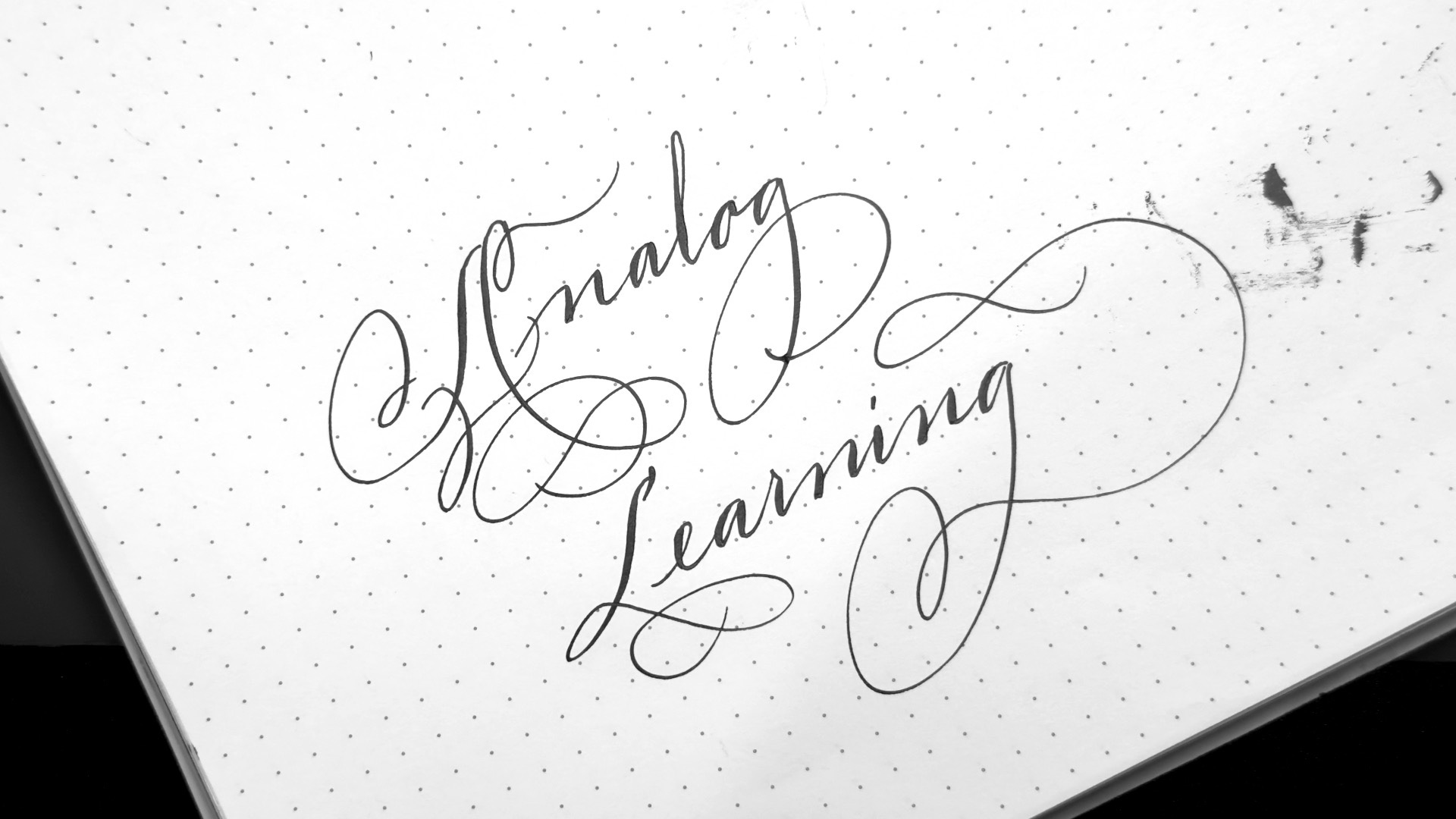
Hey guys, for the past two weeks I’ve been away from my desk for the most part. I’ve done very little work on my computer/phone and it has been good to unplug a little bit. I’ve been doing some deep cleanup and maintenance around the house, reorganizing stuff, and giving myself a bit of distance from digital projects. Not quitting them or anything dramatic, no worries. Just putting a bit of space between me and the usual routine.
I still got some physical work that will keep me away for a bit. In any case, here are a few things that stood out from my last week.
On Color
As a film nerd, one of my favorite YouTube channels for a long time has been Every Frame a Painting. Back when the channel was more active, every video felt like a little film school lesson for me. In recent years it has been much quieter, but every time a new video comes out is still amazing.
A few days ago, the channel published this video on Ozu and his use of color.
Ozu is a Japanese director who has been very inspirational for me. A lot of my video background comes from documentary work, and I took a lot from his pillow shots, his quiet frames, his rhythm, and the way his films give you space to sit with ordinary life. What I hadn’t thought about that much was his use of color (actually, I don’t think I’ve seen any of his work in color yet!). The video essay covers how he went from working entirely in black and white to eventually making color part of his visual language.
Years ago I read “Lifelike”, an incredible book on color theory that’s been published online for free, and some of it came back to me watching this. Like how the same color can feel completely different depending on what’s around it. That’s something Ozu had to figure out himself. In his early color films, some reds and oranges were so intense they swallowed the whole frame. So he started adjusting the colors around them, their tonal values, the lighting, until everything felt balanced. And once he got there, he started using elements in the image to bring another type of balance. A red object echoing another red across a cut. A towel matching a piece of wrapping paper. The video talks how this made his visual language feel like “rhyme”.
Ozu’s style has always felt objective to me. He does not seem interested in forcing you into one emotion. He observes. He keeps the camera calm. He asks actors to underplay things. Even with music, he didn’t want it to push the audience too hard.
“I’ve never wanted music that would help the expression of the actors or the feelings of the characters in the scene. It doesn’t matter how sad is the feeling of the characters who appear in the scene. At that time, the sky is blue. The sun is shining brightly. It’s the same as that. As far as the music for my film is concerned. I prefer to have good weather music always.”
A lot of cinema these days feels very manipulative to me. It tries to control the viewer too much with music, editing tricks, or emotional cues that pull too hard in one direction. Of course, trying to make something engaging is fine. But when a film tells me exactly what to feel, I usually feel pushed out of the experience. Ozu leaves more room.
“He leaves room for you to interpret and there is no right answer. His films embody the adage that a movie is 50% the audience. Ozu provides us an empty space. And in doing so, he allows us to fill it.”
On Apps
Klack, the app that simulates the sound of mechanical keyboards when you type, just pushed version 2! There are several apps that do something similar, and I even made an Alfred workflow that lets users create their own sound packs and customize this kind of thing. I still think Klack is the king of all the options out there. The sounds are excellent. The app itself is beautiful. It is one of those small utilities that doesn’t do something essential (it may be the most random app in my system), but somehow it helps me focus when writing.
I use my Alfred workflow when I am shooting videos (because I want more control), but in day-to-day use, I switch between my workflow and Klack. This latest update has some very nice quality-of-life improvements, with more customization around the actual tones. Really happy for this to be out!
On Labels
Since I’ve been doing a lot of organizing around the kitchen, I finally bought a label maker. This is something I had been postponing for a while. The classic one I had in mind was a Dymo (that’s the brand I remembered from years ago), but after doing a bit of research I found that there are now these tiny Bluetooth label makers that work with a phone app. I ended up getting the Niimbot, and I was surprised by how good it is for the price! I got one of the cheaper models, so the print quality is not perfect. You can see the limits in terms of DPI if you look closely. But for around 20 bucks, it is kind of brilliant. For folders, containers, boxes, cables, drawers, and random organizing projects, it is more than enough.
Yes, I know this is not the most exciting tech recommendation, but if you are organizing stuff, labels make everything feel more intentional. Slapping a label on something has quickly become one of those small everyday joys while working around the house.
On Omelettes
Along with all my kitchen cleanup, I’ve also been trying to learn how to make a proper French omelette. This started because I remembered seeing “omurice”, the Japanese dish where an omelette sits on top of rice. I wanted to try learning it, and while looking around I found ~this video~, which was one of the most useful explanations I found.
After a bit more research, I realized that the omelette part is basically coming from the classic French omelette. So I ended up watching ~Jacques Pépin~ explaining how to make one.
Want to see the master that made the Japanese version of the dish famous? There’s this video. Jump to 14:05 to see a crazy egg flip.
It looks super simple (well, not that flip), but the technique is tricky. For the past two weeks I’ve been a little obsessed with this. I’ve tried to cook omelettes almost every day, and I’ve failed almost every day. Every time I make one, I find a new mistake. Sometimes the pan is too hot. Sometimes the pan is not hot enough. Sometimes I don’t move fast enough. Sometimes I mess up the fold. It’s a very humbling dish, and yes, I’ve ended up eating a lot of scrambled eggs.
It reminds me of when I got into latte art a while back. I remember failing a lot before I could get anything decent. It’s a challenge, but the excitement of getting it right is great!
On Sharpening Stones
Another thing I’ve been exploring is sharpening with stones. We had a bunch of dull knives in the kitchen, and I had two options, buy new knives that would eventually go dull again, or learn how to sharpen the ones we already have. I’ve had a couple of different knife sharpeners in the past, but none of them really made much of a difference. I had heard about sharpening knives with wet stones, the Japanese way, and how it can become this slow, meditative practice. Well, I thought it sounded like the perfect fit for me, so I bought ~a very basic sharpening stone kit~ from Amazon. I wish I could blame the stones I got for my frustrations while getting acquainted with my new sharpening practice… unfortunately, I think it’s just me. Took me like three days of sharpening (plus accidentally dulling) a knife until I finally was able to cut through paper.
The videos that helped me the most: A simple, approachable beginner’s guide A much more detailed beginner’s guide One more focused on technique
The main thing I learned from watching the videos is that sharpening is not one single vague motion. It is a process. You don’t try to fix everything at once. First, you repair the edge. Then you sharpen it. Then you refine it. Another thing I didn’t know is that the stone itself needs attention. As you sharpen, the stone wears down too, so you need to keep it flat. There is also this whole idea of creating a burr. As you sharpen both sides of the knife, the tiny edge starts to curl over. That little ridge is the burr, and feeling for it tells you that the two planes are meeting. If there is no burr, the knife probably is not sharp yet. In my case, after a long while of getting absolutely nothing, feeling that burr for the first time felt almost like a miracle. There is something satisfying about having a physical sign that tells you whether the work is happening.
I’m still very much a beginner here but I understand the appeal. It slows you down. You have to pay attention. You listen to the stone, feel the edge, check your progress, wipe the blade, adjust. It is a very “analog” kind of learning, and after spending so much time on digital tools, it feels refreshing.
On Cinema
The Glory (2023). I think it had been quite a long time since I watched Korean dramas, so I had forgotten about that super overdramatic or melodramatic feeling in this kind of stuff. It was funny actually; I laughed sometimes in the wrong moments because the acting was a little bit too much over-the-top. But at the same time, I did enjoy it. You know, I think it was not cheesy in terms of the narrative and storytelling, and the way the whole revenge plot connected or branched out to so many different characters and situations. I thought it was pretty well done, actually better than some American dramas that I have watched. Overall, I thought it was very Korean and I enjoyed it. Synopsis: Years after surviving horrific abuse in high school, a woman puts an elaborate revenge scheme in motion to make the perpetrators pay for their crimes.
Tarr Béla: I Used to Be a Filmmaker (2014). I’ve been a fan of Béla Tarr for a long time. His cinema, his vision, all of it feels very poetic to me. And interestingly, my introduction to his work, some years back, was through The Turin Horse, the very film being made in this documentary. His last one before retiring. From there, of course, I went back and watched most of his other works, caught several of his masterclasses, read about his philosophy and methods. So it’s not like I came to this blind. And yet, I had never actually seen him work on set. For me, that part alone made this worth watching. I had read about the challenges of coming up with the the whole atmosphere of the film (the dust, the wind, the light). I just had no idea how much was going into the practical side of things. And one thing that really surprised me was hearing that they played audio on set while filming, whether to guide timing, rhythm, and tie it all up with the performances. Synopsis: A documentary about the making of The Turin Horse, the last film directed by Hungarian master Béla Tarr.
The Gleaners and I (2000). There’s the topic, gleaning, the old practice of gathering what’s left behind after a harvest. There’s a painting that sets things in motion. But the film doesn’t really stay put. Varda follows her own curiosity, one rabbit hole after the next, making connections as she finds them… rural gleaners in fields, urban gleaners in city dumpsters, people who glean out of necessity, people who do it out of something else entirely. And threading through all of it, there’s Varda herself. Not necessarily on screen, but always present, in the questions she asks, in what she lingers on, in the moments of play and wonder she lets through. Lovely, playful, and still profound filmmaking. At the same time, it feels like something closer to pure expression, a worldview being lived out in real time rather than constructed after the fact. You can see a the director’s personality at work here, openly and without apology. Synopsis: Varda focuses her eye on gleaners: those who scour already-reaped fields for the odd potato or turnip. Her investigation leads from forgotten corners of the French countryside to off-hours at the green markets of Paris, following those who insist on finding a use for that which society has cast off, whether out of necessity or activism.

If you liked this you may also enjoy some content I have up on my YT Channel! I don’t hang around social media a lot, but when I do I’m on IG or Twitter. You can also check out some of my online classes, listen to my music, or in case you haven’t already, subscribe to my weekly newsletter. Thank you for reading!
I Used to Be a Film Maker is so fun and mind blowing. Especially so when I try to imagine that horse on the set, feeling confused or frustrated about why there's a freaking helicopter relentlessly blowing dust to his face with all these stupid human beings around doing weird shit.