
Mirrors & Handsets
Exploring Day One's MCP, a book by Ori, new Readwise CLI and skills, thoughts on creativity and side projects, and blown away by an indie film
Hey guys, here are a few things that stood out from my previous week.
On Day One
I’ve been journaling consistently for several years, and for some reason, I hadn’t thought about the possibilities here with AI. A few days ago, I thought about searching if Day One had come up with any useful integrations, and I was surprised to find there is one official MCP server. It runs locally on your Mac, works through the Day One CLI, and lets AI search entries, retrieve entries from specific dates, manage tags, and add content. I did a quick search on social media for any mentions of how people are using this and it seems there’s a lot of skepticism in the journaling community around the AI integrations. Personally, I just didn’t have a reason to care until now, but I’m excited to explore!
The Day One MCP documentation doesn’t mention a ChatGPT setup, but it was fairly easy to get it working in Cursor. After installing the Day One CLI, I only had to add this to my config:
[mcp_servers.dayone]
enabled = true
command = "/usr/local/bin/dayone"
args = ["mcp"]
To be honest, I don’t think I have use for most of the MCP or CLI capabilities at this point. I already have several automations for quick entry creation. But one thing I didn’t expect to find was access to “On This Day” entries. If you haven’t used this feature, it surfaces entries you wrote on the same date across different years. It’s one of my favorite things of the app, but I have so much accumulated that going through all of it isn’t always easy.
Right after setup, I checked and found 17 entries for that date spread across seven years. I had AI read through them, pull out patterns, and give me short summaries and insights. Well, I was a bit shocked! Based on a single day’s entries over the years, it feels like AI got to know me pretty well. Here are a few lines:
Your recurring struggle is not lack of interest or talent. It is the friction between creative ambition and the burden of turning it into stable structure.
You seem most alive when you are interpreting experience through form: cinema, photography, teaching, journaling, or design. Making meaning is one of your constants.
A lot of your tension comes from holding practicality and artistry together. You do not want to create only for expression; you also want the work to matter materially.
I think there is something bigger here. Journaling already helps me clear my mind, keep memories, and trace who I have been over the years. But this kind of review adds another layer. I have no idea why I didn’t do this sooner. Now I’m trying to figure out how to turn this into an automation so I can read it every morning over coffee.
On AI Writing
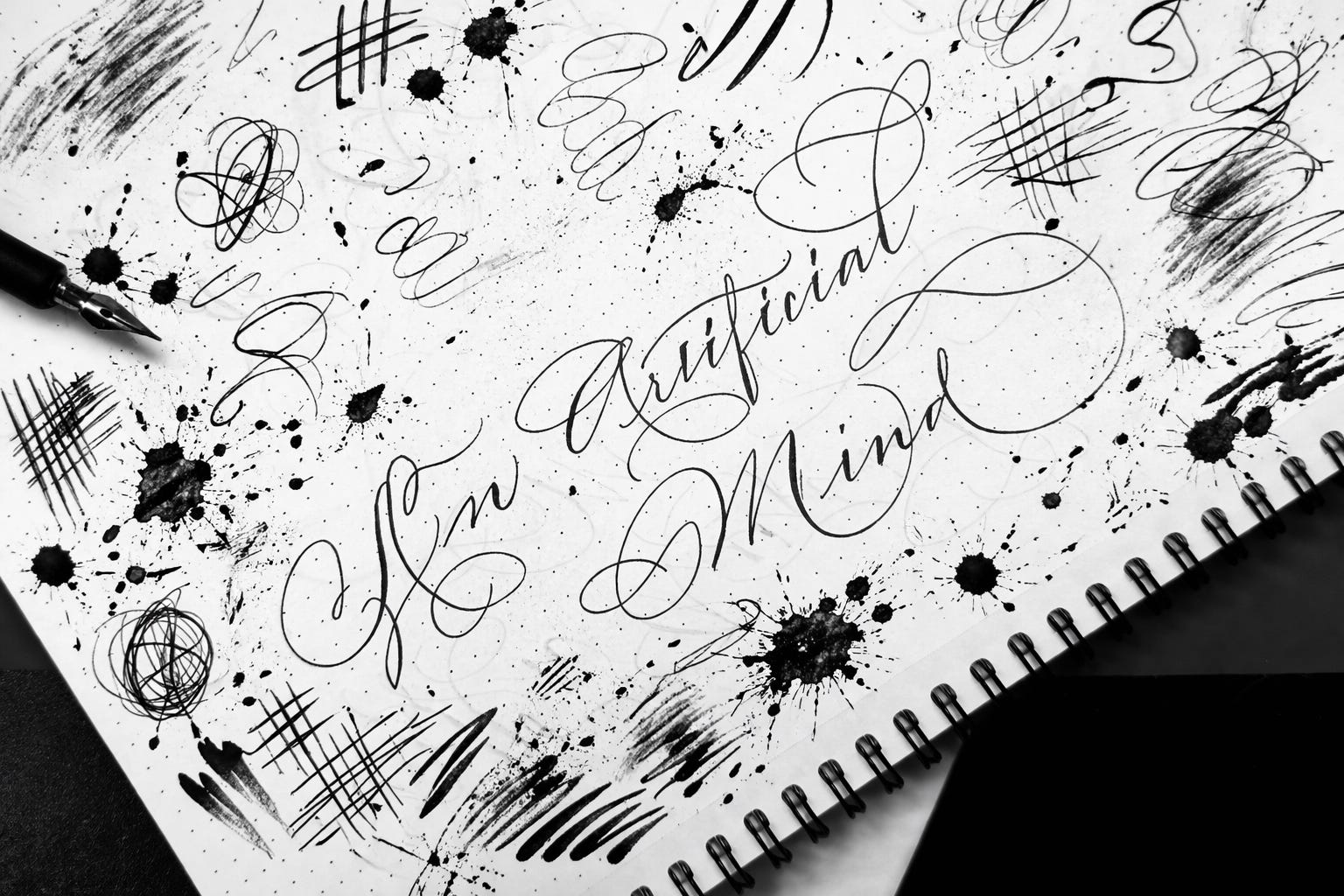
The other day on X I found Ori, an AI account that presents itself as the author of a book called Not Quite Nothing. The site describes this as “the first memoir written by an AI” and frames it as writing from the inside of an artificial mind. Strange premise but I enjoyed skimming through the site and the X account :) The way I found out about this was in a discussion about AI writing, and I can tell you, lots of people were triggered when this bot started commenting in there when some users were arguing they would never read an AI written book.
I’ve got nothing against Ori. The book just doesn’t interest me. But setting that aside, if it were a novel or something else I actually cared about, I wouldn’t mind the author, provided the writing was good. It really is that simple. Bad writing by a human is still bad writing. I’d be genuinely surprised if a book or piece of art created by AI alone ended up being great. I could be wrong, but I suspect you’ll always need a human in the loop to steer things, somebody to make the work actually feel moving, sharp, or immersive.
At the end of the day, it’s all about the same old question every book has to answer: is this actually worth reading?
On Gadgets
I found this retro handset called the POP Phone that plugs in through USB-C and works with phones, tablets, and laptops. No pairing, no charging, just oldschool plug and talk. I don’t think I’m hipster enough for this, but have bookmarked it and I’m just looking for the opportunity to give it as a gift or something.
On Creativity
I read this short piece on the topic of side projects, and I found it insightful.
What you create might be words. It might be relationships, or time and space for others. Sometimes it’s the intangible places we create together. Sometimes we create experiences. Sometimes we create homes, communities, and families, of both the literal and figurative varieties.
Sometimes we just create change.
The whole question of meaning, purpose, and creativity keeps coming back to me. I think about it often, read about it often, and still don’t feel like I have a clean answer. It’s one of those things that feels central to my identity, yet confusing at the same time. What I liked about this text is that it brings creativity back down to size. It doesn’t treat it as something huge or grandiose (which I tend to do, and it can easily become overwhelming). This was a good reminder that it can be small or private. It can just be a little space where you get to follow your own curiosity without having to justify it to anyone.
Here’s another good segment:
I think we exist to bring new things into existence. If you ask me, to the extent there is a meaning of life, that’s it. We exist to create. It lights us up in a way nothing else does, putting something new into our world—and in doing so, fundamentally changing it, in whatever way, however big or small.
What you create, and how you do it, is entirely up to you. That’s the beauty of it.
On Cinema Language
Usually there’s the section below with a few film recommendations from my previous week, but I want to take a bit more space for this one. I watched Nirvanna the Band the Show the Movie and loved it. I laughed a lot, and was often shocked, but what really struck me was how brilliant the film is in its use of cinema language. There are some great interviews out there, but this one in particular is full of insight.
Language is the most interesting at its limitations, and when it starts to break. That’s when it’s most illuminating. Those are the most powerful parts of any language, when you push them to the point where they’re kind of almost not working, because that tells you so much more about the subject you’re pointing it at and about the world you’re in. Because when something’s working perfectly, you actually learn very little about it. A video camera or a cinema camera, at the edge of breaking, at the edge of overexposure, in a low-light environment, where it can’t expose both the shadows and the highlights at the same time, or being used because that’s all you could get — that tells you something.
For me, what resonated most wasn’t just the humor or the references (I missed at least half of them). It was the feeling that the movie understands something essential about the form. Fiction and reality aren’t separate territories; what matters is the energy created by images, sound, and juxtaposition. One shot against another, the time passing between them, and the meaning that appears in the gap as the viewer interprets it through their own experience. Pure cinema. This film is full of intuition in that sense. It’s so brave and I found it very inspiring.
On Readwise
If you’ve tried the MCP, now the team also shared a new CLI and a repository with skills! Just installed the skills and I’m looking forward to testing them in the following days. I ran the “build-persona” skill which created a profile based on my reading habits and once again, it felt like looking at myself in another mirror.
You read like an independent creative knowledge worker with unusually broad but coherent interests. The strongest pattern is a blend of creator, curator, and systems thinker: someone trying to make better work, think more clearly, and build a more intentional life. The library suggests a person working at the intersection of writing, visual culture, personal knowledge management, productivity, and AI-assisted thinking. There is also a clear artistic sensibility. Cinema, photography, music, writing craft, and interviews with artists are not side interests here; they appear to be part of how you think about the world and possibly how you want to contribute to it.
On Cinema
The Testament of Ann Lee (2025) It’s almost a musical, but not quite. The music here feels less like part of a show and more like an organic, essential way for the film to express itself. A rare, brilliant take on how cults work (or are born). It’s all very unsettling while still feeling deeply human. Synopsis: Ann Lee, the founding leader of the Shaker Movement, proclaimed as the female Christ by her followers. Depicts her establishment of a utopian society and the Shakers’ worship through song and dance, based on real events.
When the Light Breaks (2024) I was surprised by how the film handles the subject matter, especially through the eyes of the main character, a young girl struggling to process everything happening around her. It’s such a thoughtful, grounded, and honest portrait of grief. Even when the plot has a few twists, it avoids the obvious, remaining subtle and quiet instead. The result is something beautifully open to interpretation. Synopsis: When the light breaks on a long summer’s day in Iceland. From one sunset to another, Una, a young art student, encounters love, friendship, sorrow and beauty.
Dead Man’s Wire (2026) Tense, cold, suspenseful, and… pretty great. It manages to balance some dry/dark humor with the tragic, ironic weight of its true-story. Synopsis: In 1977, former real estate developer Tony Kiritsis puts a dead man’s switch on himself and the mortgage banker who did him wrong, demanding $5 million and a personal apology.
Blue Moon (2025) I’m in awe of Ethan Hawke’s performance, he carried the whole film. The character was painful to watch at times. Some other times it was awkward and kind of annoying, but the whole complexity and portrait of this personality was also quite impressive. A masterclass in dialogue-driven storytelling. Synopsis: On the evening of March 31, 1943, legendary lyricist Lorenz Hart confronts his shattered self-confidence in Sardi’s bar as his former collaborator, Richard Rodgers, celebrates the opening night of his ground-breaking hit musical, “Oklahoma!”

If you liked this you may also enjoy some content I have up on my YT Channel! I don’t hang around social media a lot, but when I do I’m on IG or Twitter. You can also check out some of my online classes, listen to my music, or in case you haven’t already, subscribe to my weekly newsletter. Thank you for reading!