
Notes & Content
Note-taking in the age of AI, Maria Popova on "content", Readwise Wise Reads, latest reads, and system-wide dictation with Codex
Hey guys, here’s some stuff that stood out from my previous week.
On note-taking
For a while I’ve been interested in personal knowledge management, note-taking, productivity systems. I used to be very disorganized, so discovering Building a Second Brain around the year 2020 really changed the way I think about information. After that I went through a whole marathon of learning about productivity methods, note-taking methods, PARA, read-it-later apps, and a bunch of similar things. My development in that area has slowed down a bit, but I think I got a solid foundation. I still think a lot of that is useful, especially when trying to create systems. I think it eventually gave me some direction on where to take my daily routines, journaling, note-taking, productivity, and even recently it’s helped me get more organized at home.
This past week I watched this video on note-taking. It tries to pose the question, once more, about the point of note-taking or how to do it effectively, especially now that we are in the age of AI. Yes, AI can summarize articles. It can extract insights. It can organize messy notes. It can create structure very quickly. It’s all useful and I use AI like that myself.
Still, there is something that AI cannot do for you, which is internalize the idea. That part still has to happen inside your own head. One point that is covered in the video, and where the human element comes into play is what the video calls “stimulus material”. This is different than simple transcription-style note-taking. Transcription is when you are just copying down what the book, lecture, or article says. Facts, quotes, dates, summaries. But stimulus material is more personal. It is what happens when a thought hits something in your own mind and creates a connection.
In other words, the value of note-taking is not only saving information. It is noticing what the information does to you, and how you can relate to it.
“The point of note-taking is applying structure to your thinking. It’s trying to discipline your thinking. So the more you try to re-articulate what you’re thinking onto the page, the more succinct your notes will become.”
It’s no secret that there’s no perfect note-taking system, but I think there’s value in this “re-articulation”. Taking an idea and letting it touch your own experiences, your own questions, your own projects.
AI can help us process more. But thinking is still something we should not forget to practice.
On content
I listened to this conversation with Maria Popova on the How I Write podcast, and I caught a few unexpected ideas. David (the host) asked her about “content,” and she said she’s allergic to the word. That surprised me a bit because, in a way, what she does on The Marginalian could easily be described as content. She shares and curates books, quotes, artists, thoughts. From the outside, I guess most people would call that content.
But her issue is with what the word has come to mean. The way we use it now often turns creative work into units made to hold attention, and attention into something that can be sold.
“We have reduced creative work, cultural matter, to what we call ‘content’… which presumes a container, and in a way it’s an accurate description because the container is advertising. This is what carries the modern internet, and we are making everything creative subservient to that.”
I’ve thought about this for a long time because I also use the phrase content creation. I don’t really know what else to call it. I make videos. I write this newsletter. I share things online. Technically, yes, that is content. But I also understand the discomfort with the word. Because the moment you start thinking only in terms of content, it becomes too easy to measure everything by views, likes, retention, engagement, thumbnails, hooks, all that. And those things can be useful if you are only thinking about reach, but they can also slowly distort the work.
At least for me, I always feel this tension. So what I try to do is think beyond the content metrics (basically try my best not to care about numbers), and instead think about its meaning, depth, and impact. I want people to find what I make. Of course I do. But I don’t want the work to be shaped only by what performs well. I still want to follow what I’m genuinely curious about, even when it’s a bit random or personal or not obviously useful.
Maybe the word “content” is too broad now. It puts thoughtful essays, personal videos, clickbait, ads, tutorials, art, and shallow internet noise inside the same bucket. But man… what else do we call this?
On reading
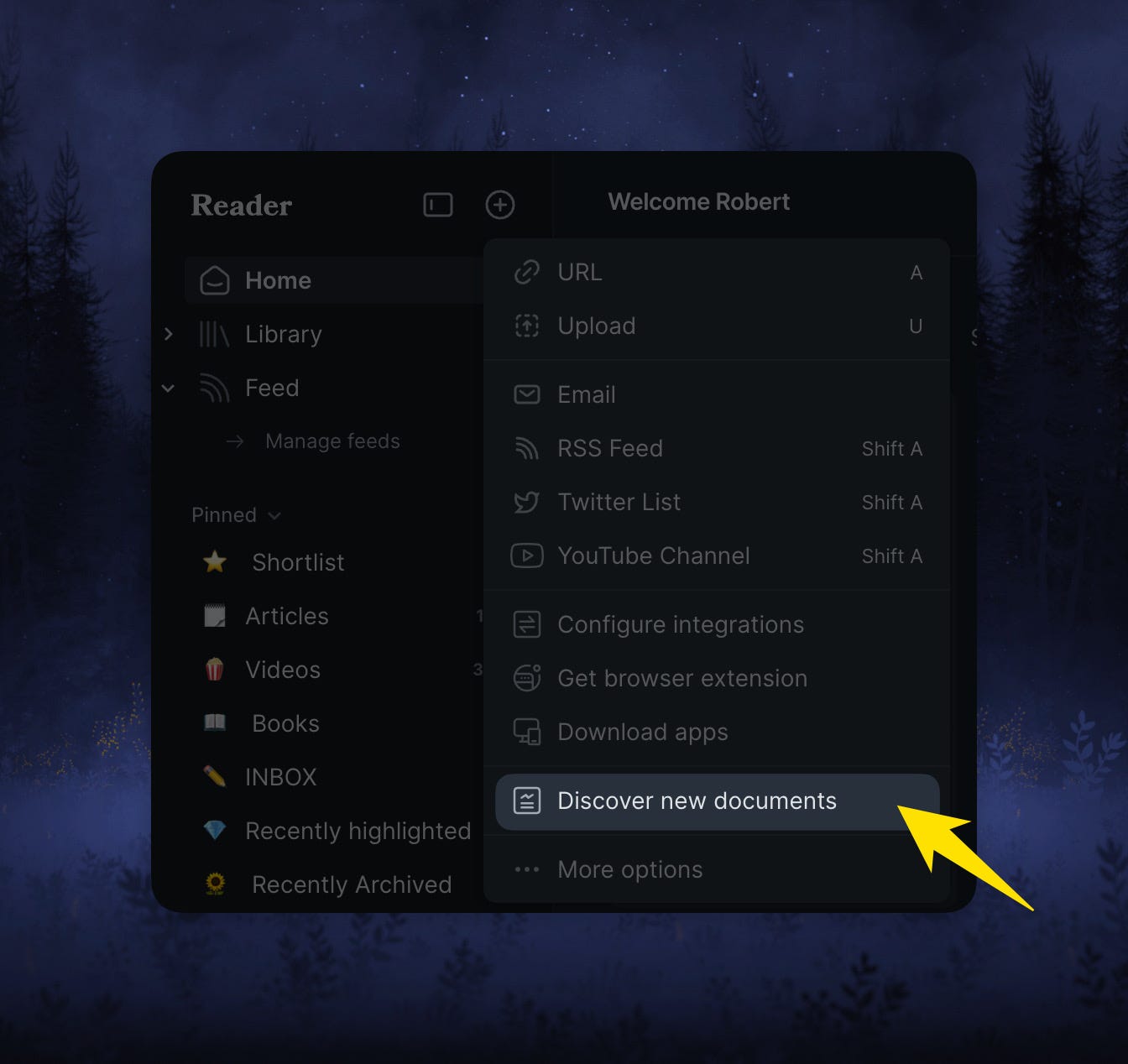
This past week I also rediscovered Wise Reads, which is Readwise’s page for popular articles being highlighted by other Readwise users. I already receive every new edition via email. I’ve found several good things through it. The problem is that the email sometimes ends up lost in spam and I forget to go look for it. So I was happy to find that there’s also a simple page for it, and even a way to browse it inside the Readwise interface. Apparently this feature has been there for a while, so I’m a bit late to it, but still. Nice discovery.
Talking about reading, this past week I finished Stardust by Neil Gaiman. I think this is the third novel I’ve read from him. I read Coraline before, and also The Graveyard Book.
I’ve always liked Neil Gaiman as a teacher. I’ve listened to him talk about the craft of writing many times, and there’s something very inspiring in the way he speaks about imagination. But Stardust made me connect more with his fiction. It has a fairy tale quality that I’m really enjoying lately.
On Codex and dictation
This past week was a big one for Codex. OpenAI added Codex to the ChatGPT mobile app, which means you can now monitor, steer, and approve Codex tasks from your phone while the work is happening on your computer. I tried it out and it’s still a little buggy in places, but the idea is very powerful.
For a while I’ve been interested in ways to control my Mac remotely or keep workflows running when I’m not at the computer. I’ve used different workarounds for this, and apps like JustPressRecord/HyperDuck have been part of that. But Codex feels like it might replace some of those workflows for me, especially because it can work directly with files, tools, terminal output, MCPs, and (when needed) specific project context.
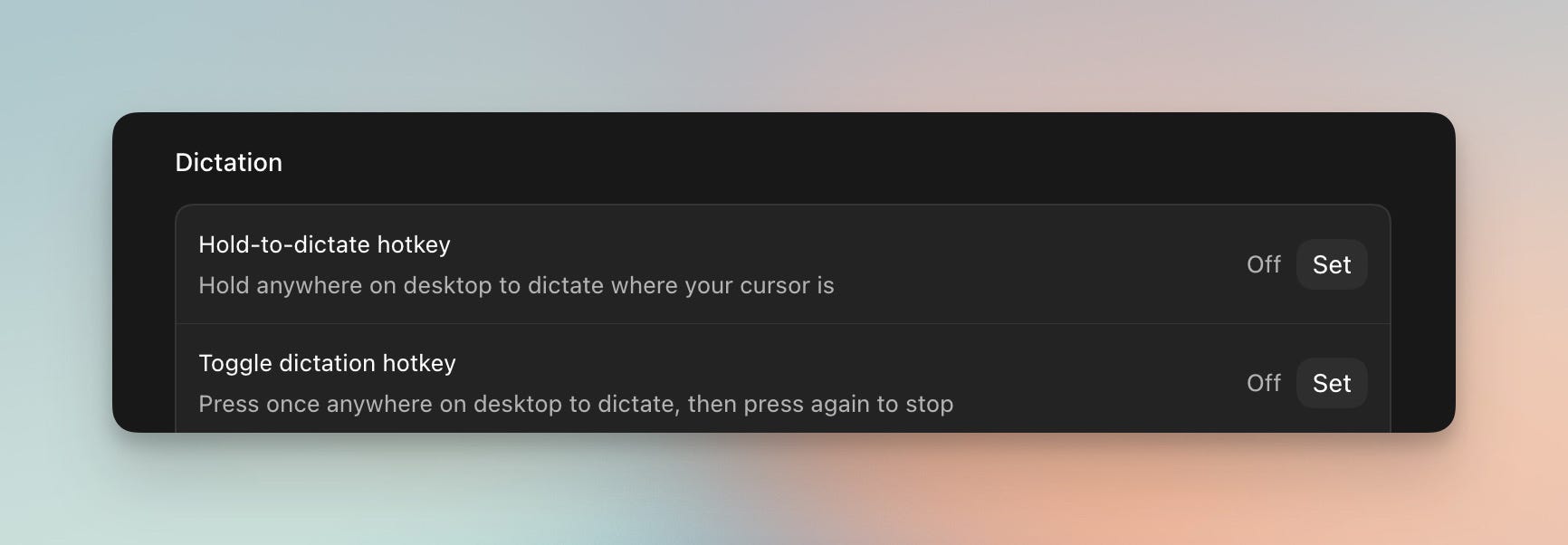
One small thing I discovered while looking around the Codex settings is that it also has system-wide dictation. What! This was unexpected. It’s not the fastest or most polished dictation experience I’ve used but it can still be surprisingly useful for something that seems almost hidden. You can even add your own vocabulary and dictionary terms, which should help with accuracy.
On Cinema
Julien Donkey-Boy (1999). A (very) raw portrait of a dysfunctional family, mostly seen through Julien, who seems to be suffering from schizophrenia. The father is a bully, the brother is being pushed into this harsh idea of manhood, and the whole family dynamic feels uncomfortable and broken. There’s anxiety running through the whole thing. The shaky camera, the rough sound, the cuts, the mix of video and still frames… it all makes the film feel unstable, almost sick. But here, it makes sense. The form becomes part of the experience. Even though the film is sort of experimental, I found it easy to follow. Not easy-to-watch exactly, but immersive. Synopsis: Undiagnosed, untreated and generally untethered schizophrenic Julien lives with his pregnant younger sister, anorexic aspiring wrestler brother, sympathetic grandmother, and severely depressed and abusive German father.
Pictures of Ghosts (2023). I watched this because I really liked “Neighboring Sounds” years ago. That film stayed with me mostly because of its atmosphere, the feeling of a neighborhood, a place, and the people living inside it. “Pictures of Ghosts” is very different, of course. Not quite a documentary. More like a collage of archive footage, photographs, clips from films, found material, and narration. But somehow, through the way everything is structured, it starts creating the same kind of tone or atmosphere that got me on Neighboring Sounds. Synopsis: Downtown Recife’s classic movie palaces from the 20th century are mostly gone. That city area is now an archaeological site of sorts that reveals aspects of life in society which have been lost. And that’s just part of the story.

If you liked this you may also enjoy some content I have up on my YT Channel! I don’t hang around social media a lot, but when I do I’m on IG or Twitter. You can also check out some of my online classes, listen to my music, or in case you haven’t already, subscribe to my weekly newsletter. Thank you for reading!
Knowledge organization and systematizing has always been a challenge that I totally dismiss due to my laziness, it's refreshing and inspiring to hear your thoughts about it.
Speaking of reading, I just finished rereading Roadside Picnic after my first read from about half a year ago. How much better it feels this time despite how I immediately considered it my all time favorite from my first read is shocking.
This is contributing to my increasing disdain towards Tarkovsky in his films travesty of representing or introducing those masterpieces properly. Can you imagine that Stalker used to be one of my favorite films.
I never managed to finish the Solaris film and after finishing the book about 3 months ago I'm afraid that attempting to watch it will add to my critical opinion of him.
In both cases, the literary genius of the fictions make it seem that literature just can't be faithfully represented in any other form.
That is not to denigrate the power of cinema, especially not to condemn it as a lesser form of literary medium than literary fiction. Sometimes, films can show that certain effects are so exclusively viable only through cinema.
One such case that shocked me to the ground is Afire by Petzold. Although I'm sure there are plenty more. There's still something about Afire that feels so special and delicate. It's a film that doesn't portend to be of much sublimity at all. It felt casual, even trivial. What I initially felt it to be almost feel annoyingly obvious and silly. Ha, then, it just took up everything.