
Signals and Noise
Thoughts on audio privacy, Spokenly out of the app store, a new macOS automation app, writing with AI, and a lock screen calendar
Hey guys, here are a few things that stood out to me this past week:
On Spokenly
I’ve mentioned Spokenly a few times when sharing my thoughts on AI dictation apps. I’ve always liked the developer’s willingness to experiment with power features, and his responsiveness overall is great. One thing I always found limiting was that the app was in the App Store; while that can inspire trust for some, it introduces sandboxing limits that restrict system integrations.
Well, I was surprised to see that the developer recently released a non-App Store version available directly on its website! No more issues running scripts, and you can do much more with context and accessibility! I haven’t tested this version in depth. I’m not really looking for alternatives right now (I’m all good with Superwhisper and Macrowhisper) but this is still exciting and may be worth looking into if you’re still looking around for a dictation app with some power user features.
On Automation
The Low-tech Guys just released Crank, an automation app for Mac. It listens for system events (like Wi-Fi changes, screenshots, focus modes, or calendar events) and triggers actions. On the surface it reminds me of Keyboard Cowboy in its “when this happens, do that” approach. However, Crank has a few more tricks up its sleeve that could make it better for beginners. For example, you can prompt AI for automations.
My automation setup is already crowded with Keyboard Maestro, Alfred, BTT, and Karabiner, so I don’t need another layer for now. Still, I wanted to give it a shoutout. The app comes from the developer of the fantastic Clop which I use every single day.
On the AI voice
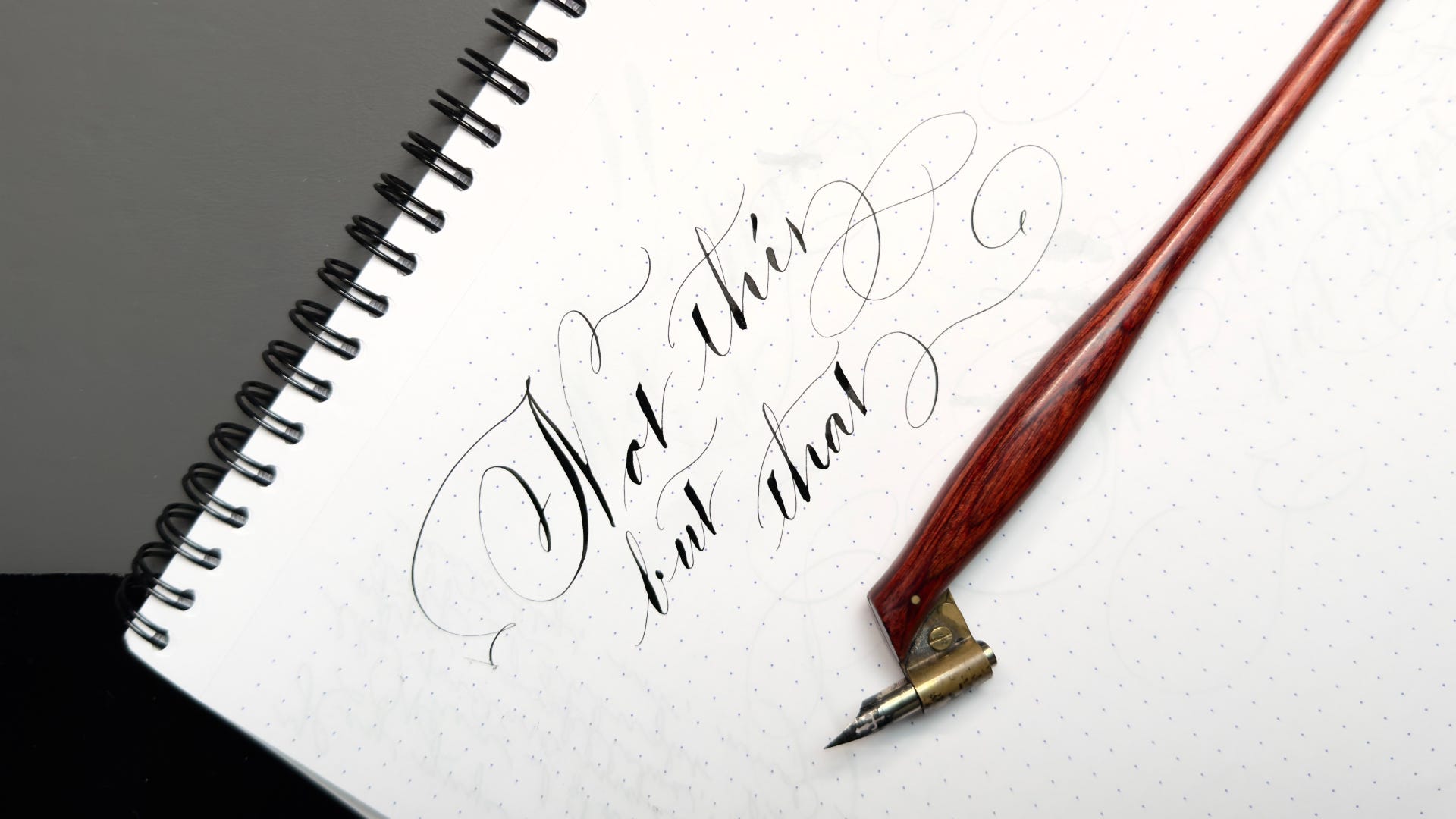
I read this article on AI writing and thought it offered a balanced take on what the “AI voice” actually is. I use AI for drafts, scripts, and outlining, but I frequently find myself thinking about this topic. The author highlights obvious AI markers like the hyperbole, rule of threes, em-dashes, and “not this, but that” structures. It feels to me like these have created an almost obsessive anxiety online. It’s kind of absurd; I’ve caught myself avoiding the em-dashes I’ve always loved just to steer clear of sounding like a machine.
There’s some irony in changing our style to avoid sounding like a tool.
But the bigger thing that the text covers is how AI subtly can flatten our voice while helping. You start with a quick grammar check, and before you know it your text is not yours anymore. It doesn’t hold your perspective or words. I believe that relying on outside creative help isn’t new (and definitely not always bad), but AI makes it incredibly easy to loose control. Ultimately, it’s on the creator to decide where to draw the line.
The real takeaway is to keep exercising your own judgment. Stay in the driver’s seat.
On wallpapers
At the beginning of the year, I was excited to share some minimalist iPhone calendars I found online. I ended up using The Life Calendar with the option which shows the year grouped by months. I’ve been happy with it for a long time, but last week I found myself wanting to add widgets to my lock screen. It just didn’t look right due to the lack of header space, and I had no clue how to fix it.
Long story short, I asked ChatGPT what could I do about it. After a few prompts, I had my own lock screen calendar built with all the customization I needed (DOWNLOAD HERE).
Something I don’t like about relying on web apps and cool tools you stumble across on Twitter is that the site can disappear anytime, leaving you with nothing. The feeling of “owning” this changes the whole experience. Needless to say that all the credit goes to the original creator (and to AI). But given that there’s this other project, I don’t know who came up with the idea first.
Here’s how to set this up:
Export the images for the year
Save them to a folder inside Shortcuts
Go to the Files app on your phone and keep that folder downloaded (press and hold to get the option)
Set up a daily automation to update your lock screen every morning.
Here is the shortcut I’m using; you might need to customize it a bit, but you can see the how it works.
On Audio Privacy
I saw this device that claims to kill nearby audio recordings. It’s an interesting concept (I wonder if it actually works!) but I’m even more curious about the psychology behind it. I think a lot of it is cultural. Growing up in Mexico, and then living in the U.S. for a while, I noticed how different people’s expectations of personal space and privacy can be. My wife, who’s from China, has an even different relationship with it. Then there’s my interest in photojournalism and street photography which has given me yet another angle on the whole thing.
Yeah, it’s complicated.
Honestly, I find it a little unrealistic to expect much privacy online anymore. It’s just curious how devices like this are a direct response to the tension that exists around the topic.
On Taste
I’m still on a ChatGPT trial. I’m this close to getting convinced into paying for Plus. I’ve avoided all AI subscriptions until now. Getting Alter was my most expensive attempt at this. To be honest I still love Alter but the usage limits on the premium models like ChatGPT and Sonnet have sent me looking for alternatives. I’m thinking about sticking with the $20 sub for ChatGPT/Claude for small coding tasks, projects with lots of context, and use Alter for automations and the rest of my day-to-day work, which should keep me from hitting those limits so quickly. I hate having to split and manage my usage like this.
Now, one thing that many users agree about ChatGPT is that it lacks taste. It has the logic, but its UI judgment is hit-or-miss. I found a Taste Skill GitHub project that attempts to improve this. My own projects don’t actually need a lot of design skills, but after running a couple of tests, I’ve found the skill makes a big difference in Codex.
On Cinema
Person to Person (2017). On the surface, it feels like nothing is happening. It’s like a slice of everyday New York life. After a while, I was totally fine with that. I actually felt empathy for the characters and the situations they were encountering throughout the day. The film it’s quietly beautiful. Like a walk in the park. It’s just about being curious and going with the flow. Synopsis: Follows a variety of New York characters as they navigate personal relationships and unexpected problems over the course of one day.
A Useful Ghost (2025). The absurd side of it reminded me a bit of early Lanthimos, but the Thai element gives it a very distinct “texture.” Like a fable that weaves traditional folklore into a modern setting, while managing to cover a lot of ground (politics, social issues, inequality, and a bunch more) without losing depth. Not quite a drama. Not a total comedy either. But definitely something that feels fresh and… profound. Synopsis: Worried about her husband being allergic to dust, Nat, a recently-dead woman, returns as a ghost possessing a vacuum cleaner to clean the house and protect her family from other vengeful ghosts in the house. To become a useful ghost, she needs to get rid of the useless ones.
Take Out (2008). I’ve always found the work of Sean Baker very inspirational. I really like the way he portrays those people on the edges. He is not just pointing the camera looking for an “interesting story.” Instead, he’s paying attention, and the film invites the viewer to pay attention too. Surprised to see this even in this early work. With this film you basically spend a day with the main character delivering food through the rain, under enormous pressure, carrying a weight that most of the people opening their doors have no idea about. I loved the whole buildup, the stakes, and the whole resolution. Synopsis: An illegal Chinese immigrant falls behind on payments on an enormous smuggling debt. Ming Ding has only until the end of the day to come up with the money.
The Good Boy (2026). Impossible not to compare it with Dogtooth, or Castle of Purity, but this one still stands as something fresh and different. Let’s say this adds a different point of view to the mix… that, plus the Stockholm syndrome element, is handled brilliantly. By the end, I was even questioning myself a little, and I attribute that to how convincingly the film pulls you into its warped logic and makes you understand both sides. Super interesting; amazing performances across the board. Synopsis: Tommy, a volatile 19-year-old, revels in drugs, parties and violence. After getting separated from his friends on a drunken bender, he is abducted by a shadowy figure. He wakes to find himself imprisoned in the basement of a remote Yorkshire house, inhabited by a very strange family. But what unfolds is not what he could possibly expect.

If you liked this you may also enjoy some content I have up on my YT Channel! I don’t hang around social media a lot, but when I do I’m on IG or Twitter. You can also check out some of my online classes, listen to my music, or in case you haven’t already, subscribe to my weekly newsletter. Thank you for reading!
Robert, I always love your thoughtful posts and other work. I have been using a service at Magai.ai that allows me to use all of the major LLMs and other AI tools for a $20/month fee. You might want to look into it. I like the site and the developer, Dustin Stout, and his ethos. Paying for this also provides free access to Dotto Tech's AI Academy to get a feel for his style. Simple for your skills, but useful to see him in action. There are similar aggregators of AI, but I do not trust most of them.
Thanks for mentioning Crank and Keyboard Cowboy. (In case you’re not aware, the unique feature of crank Are the many triggers that it allows for automations, especially hardware related ones)
But thanks, especially for making me aware of the sideload version of Spokenly. I think Spokenly is closest to my needs, but the sandbox has been bugging me…