
Obsession and The Creative Process
Ethan Hawke on Creativity and Method Acting, Positive Obsession, ToolVox GPT v1.0.2 release and Some Thoughts on its creation.

Hey guys! Here’s a few things that stood out from my previous week.
On Creativity
This morning I watched a short video of Ethan Hawke talking about giving yourself permission to be creative. I had actually watched this more than a year ago, and I remember it resonated with me, but for some reason, I had not bookmarked or highlighted it. I stumbled upon it again and this time I made sure to annotate some things that stood out. If you haven’t watched it, I recommend it. It’s short but insightful. Here’s one of my highlights: It worries me that sometimes whenever we talk about creativity—because it can have this kind of feel that it’s just nice, you know, or it’s warm or it’s something pleasant. It’s not. It’s vital. It’s the way we heal each other. In singing our song, in telling our story, in inviting you to say, “Hey, listen to me, and I’ll listen to you,” we’re starting a dialogue.
I also happened to stumble upon another article about Ethan Hawke’s thoughts on Method Acting. To be honest, I know very little about Method Acting. I know it’s a very intense process in which actors immerse themselves in the character they are playing to deliver emotionally charged or realistic performances. This “method acting” has been criticized because in some cases it’s taken to extremes, with actors acting even outside of filming time. What stood out from this article is this highlight: Charlie Parker practiced the saxophone 12 hours a day. Can you imagine living with somebody practicing the saxophone 12 hours a day? But we’re still listening to his records, so you want to tell him, ‘Really, do six?’
On a Huge Creative Project
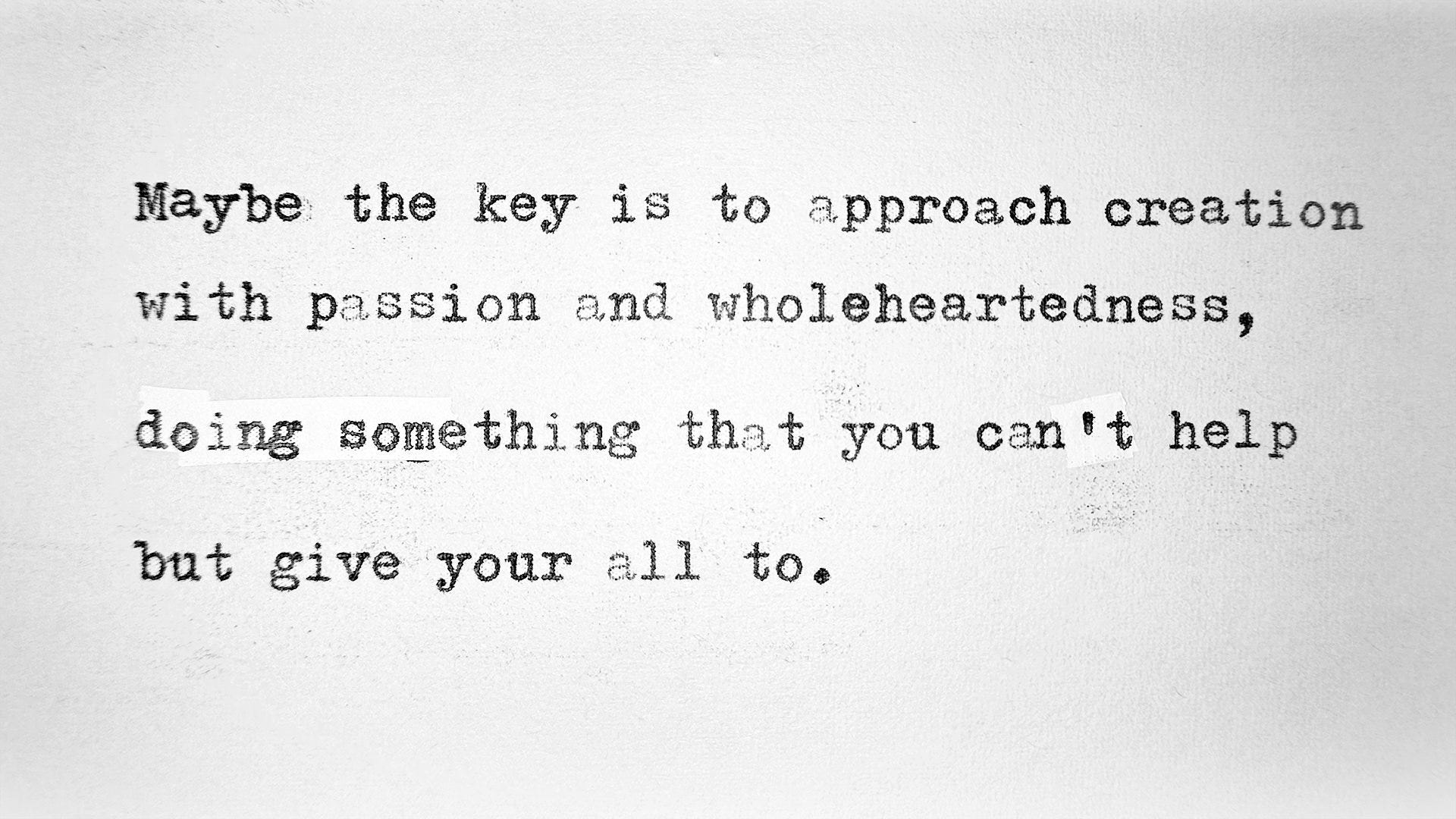
Reading about Method Acting and how Ethan Hawke talks about how ‘ordinary effort creates ordinary results’ reminded me, once again, of this letter from André Gregory to Richard Avedon. I shared this a few weeks ago. André talks in a different way about the work/life balance for artists. Basically, he proposes that you can’t separate one from the other: “the work changes the life, and the life changes the work.” Perhaps the idea of trying to separate work from life may actually be a threat to the act of creating (for some, at least). Instead of judging obsessive creators, perhaps we could consider it as a possibility. There’s also this blog post by Austin Kleon where he talks about positive obsession. Maybe the key is to approach creation with passion and wholeheartedness, doing something that you can’t help but give your all to.
These thoughts that popped up in my mind after reading a couple of articles have been very present for me over the years. Every time I’m involved in big creative projects, I feel consumed by them. Most recently, I was obsessed with a huge Shortcut creation project. Until July, I had been testing different Chat GPT apps, Shortcuts, and trying to fit them into my workflow. But then I thought about coming up with my own solution. I wanted something that could integrate with my favorite tools in a unique way. So I started working on it, thinking I’d finish in a few hours. But one idea led to another, and before I knew it, I was working on something really big. Then I had the idea of possibly sharing it with others, which shaped the project even more—and added many more hours of work—, trying to make it customizable as possible.
I finally finished this Shortcut I called ToolVox GPT. To be honest, I’m still wondering if all this effort, especially the effort put into sharing it, was worth it. It’s not only a big Shortcut, but it’s somewhat complex to understand. I know we live in a fast-paced world and people have limited time to read a super long guide. Plus, I’m a bit late to the game, and Chat GPT apps or shortcuts are nothing new. But I believe what I did has something new and powerful to offer, which is why I shared it. I also think that this Shortcut is good for anyone, not just power users. It does require some effort on the user’s side to get familiar with it, but I try to remain hopefully there’s some of you out there who will find value in it.
I made an overview video for you to check out some of the features:
If there are any improvements that I can make on ToolVox GPT, I’ll continue to share them in the original link. Right now, for example, I’ve made two small updates after I emailed my subscribers. We’re now on v1.0.2. This new version includes a couple of fixes for the “images” input type and another fix for how the Shortcut handles mixed input while requesting Whisper AI Transcriptions. Any further updates will also be mentioned in this newsletter. Are you interested in Shortcut creation? I’d also be happy to share some of the creation process behind ToolVox GPT.

On Cinema
The Passenger (2023). Synopsis: Randolph Bradley is perfectly content fading into the background, but when his coworker Benson snaps and goes on a violent killing spree, he’s forced to face his fears and confront his troubled past in order to find a way to survive.
Benny’s Video (1992). From master Michael Hank. Synopsis: A 14-year-old video enthusiast obsessed with violent films decides to make one of his own and show it to his parents, with tragic results.
Like Asura (2003). I love all the films I’ve seen from Yoshimitsu Morita so far. I love how he portrays Japanese culture and integrates it with a very creative and smart use of cinema language. Synopsis: The four Takezawa sisters discover that their father has an illegitimate child so they hire a private detective to investigate.

If you liked this you may also enjoy some content I have up on my YT Channel! I don’t hang around social media a lot, but when I do I’m on IG or Twitter. You can also check out some of my online classes, listen to my music, or in case you haven’t already, subscribe to my weekly newsletter. Thank you for reading!